· 9 min read
Every year in late May and early June, the first southern right whales of the season return to Encounter Bay to calve. It is a quiet, tentative arrival after months of absence, and it marks the moment the Fleurieu wildlife calendar turns over. Here is the history of the whales, how they came back, and how to see the first arrivals.
The pause and the return
For eight months of the year there are no whales in Encounter Bay. From about November through to the end of May, the bay is empty of the big black shapes that arrive with the cold weather. The sa-whale-centre on Railway Terrace keeps a daily sightings whiteboard, and through the summer and autumn the board reads the same thing day after day: no sightings, no sightings, no sightings.
And then in late May or early June, a whale turns up. One whale, usually, alone, moving slowly through the deeper part of the bay between the-bluff-rosetta-head and granite-island. The sightings whiteboard gets its first entry of the new season. Within a week there will be two or three. Within three weeks there will be cow-calf pairs. By the end of June the bay will have half a dozen whales in it on any given day, and the season that runs through winter and into early spring will be properly underway.
The arrival is always slightly tentative. It is as if the first whale is checking that the bay is still there.
Where they come from
The southern right whales that calve in Encounter Bay spend the rest of the year in the sub-Antarctic feeding grounds, about 2,500 kilometres south of the Australian mainland. Through the Southern Ocean summer they graze on swarms of copepods and krill in the cold productive waters around the Kerguelen Plateau and the pack ice. By the middle of the southern autumn - late April, early May - pregnant cows start the long slow northward migration to calving grounds on the southern coasts of Africa, South America and Australia.
The Australian calving population uses several sheltered bays on the southern coast. The biggest numbers are at the Head of Bight in South Australia. A smaller but important population calves at Fowlers Bay and Encounter Bay. Each cow gives birth to a single calf, nurses it for about three months in the sheltered shallow water, and leaves to return south in late September or early October when the calf is strong enough for the open ocean migration.
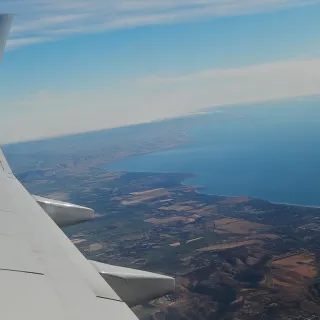
Encounter Bay is at the eastern edge of the southern Australian calving range. On most years it holds roughly 10-20 southern right whales at some point during the winter. On good years it holds more.
The whaling station years
There is a darker earlier chapter to the Encounter Bay whale story.
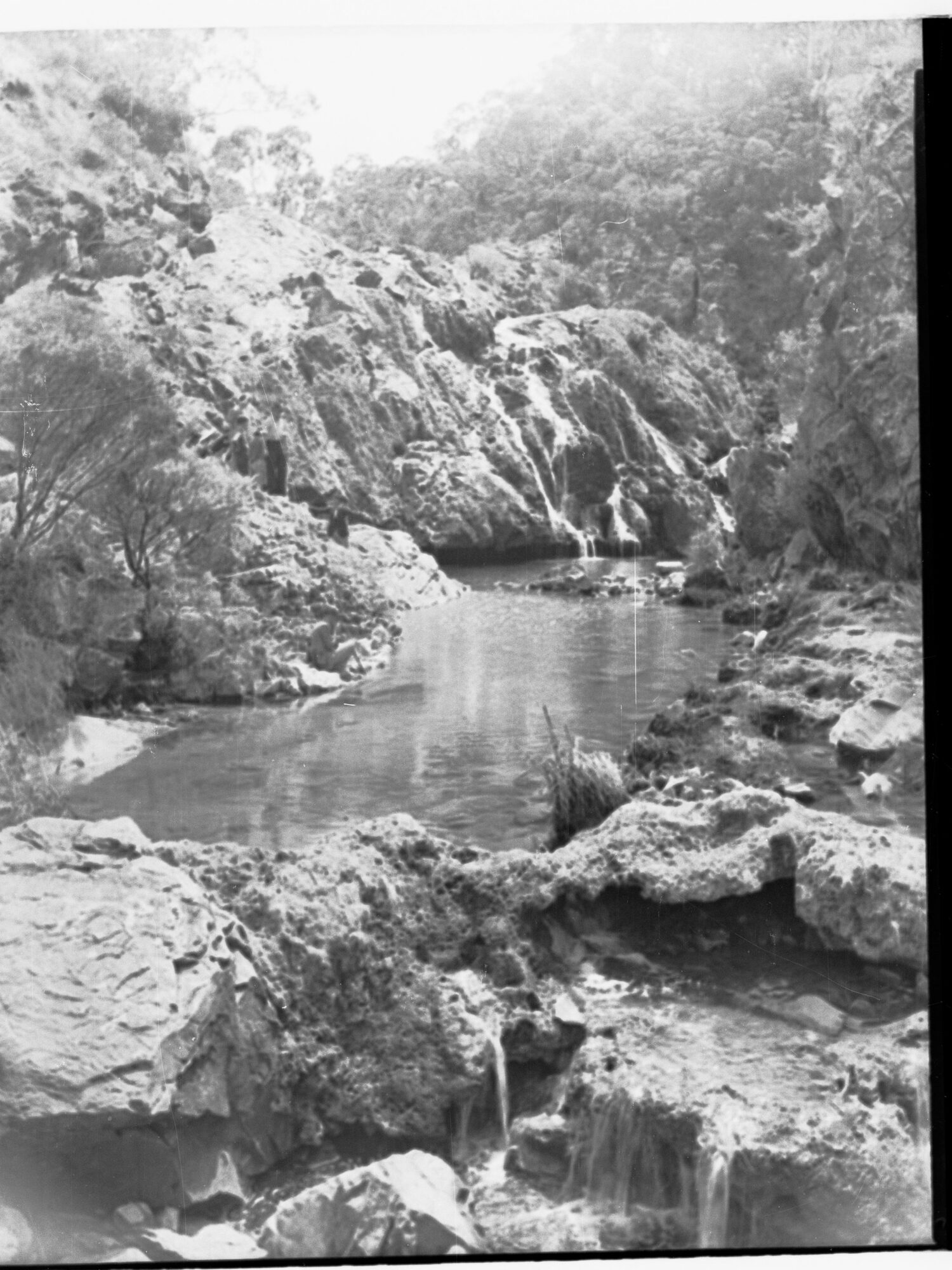
The first British whaling station on the South Australian coast was established on Encounter Bay in 1837 - the year after the colony was founded and 15 years before Adelaide itself had a proper permanent wharf. The station was a shore-based operation, which meant the whalers spotted whales from the headland at what is now the-bluff-rosetta-head, launched open boats from the beach below, rowed out to harpoon the whale in the bay, and then towed the dead animal back to a try-works on shore where the blubber was boiled down into oil.
The species they were killing was the southern right whale - called 'right' because it was the right whale to kill: slow, close to shore, buoyant when dead, and full of valuable oil. The Encounter Bay station killed them in large numbers for about 15 years. Other stations at Rapid Bay and at Rosetta Harbour on Kangaroo Island did the same work on the same population. By 1850 the southern right population of the southern Australian coast had been reduced from an estimated 15,000 to perhaps 300.
The whaling stations closed in the early 1850s because the whales were gone. A century of continued high-seas whaling by American and European fleets took the global southern right population to perhaps 300 breeding females by 1930 - the species was essentially extinct in commercial terms. International protection was granted in 1935. Illegal whaling continued for several more decades, and the true low point was probably in the 1970s.
The return
The recovery of the southern right whale is one of the quieter success stories of 20th-century conservation. After decades of near-absence, the first cows started showing up again in small numbers at the Head of Bight in the late 1970s. By the early 1990s there were breeding females calving at Encounter Bay again for the first time since the 1840s. The sa-whale-centre was established in 1998 specifically to monitor and interpret the return.
The current population that uses the southern Australian coast for calving is probably about 3,500 individuals - up from a few hundred in the 1970s but still a small fraction of the original population. Recovery has been slow because southern right whales only breed every three years and each cow only produces one calf at a time. At current recovery rates it will be another 50 years before the population is back to pre-whaling numbers.
But they are back. And every June, when the first whale of the season appears in Encounter Bay, it is a descendant of the few hundred animals that survived the decades when nobody knew whether the species was going to make it.
How to see the first arrivals
The best vantage points for early-season Encounter Bay whale watching are all within ten kilometres of Victor Harbor.
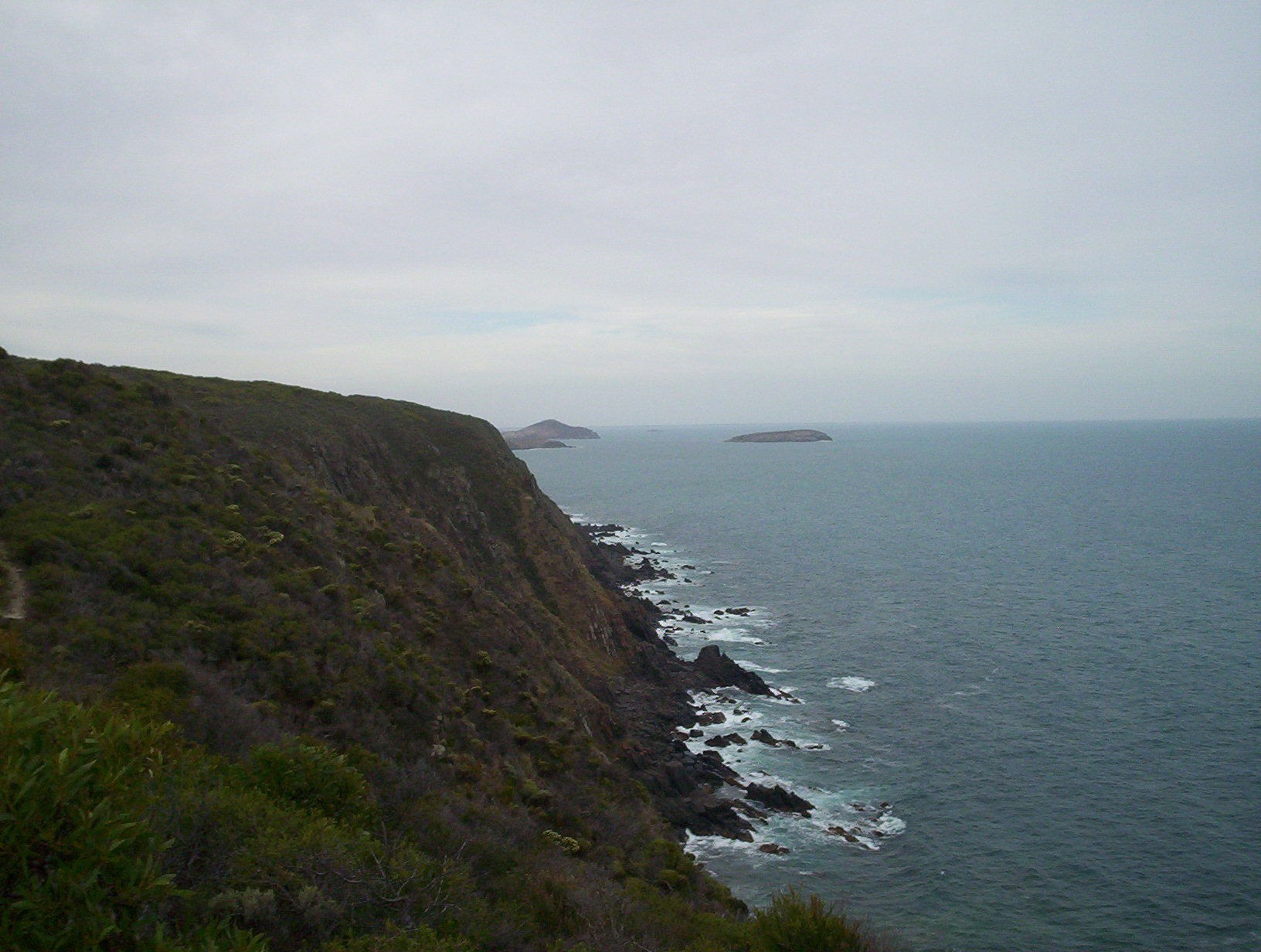
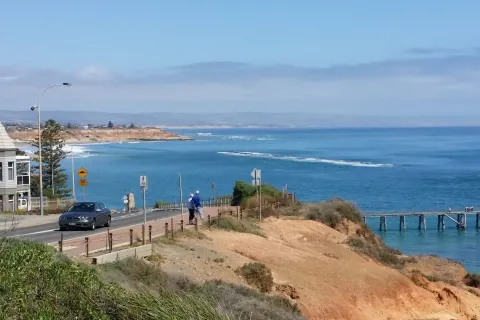
the-bluff-rosetta-head is the obvious one. Park at the base of the Bluff, walk the short steep path to the summit (about 20 minutes up, much quicker down), and look west into the bay. The Bluff gives you 270 degrees of view, height of about 90 metres above sea level, and a clear sightline across most of the calving area. A single 20-minute session in early June will usually give you one sighting if whales are in the bay at all.
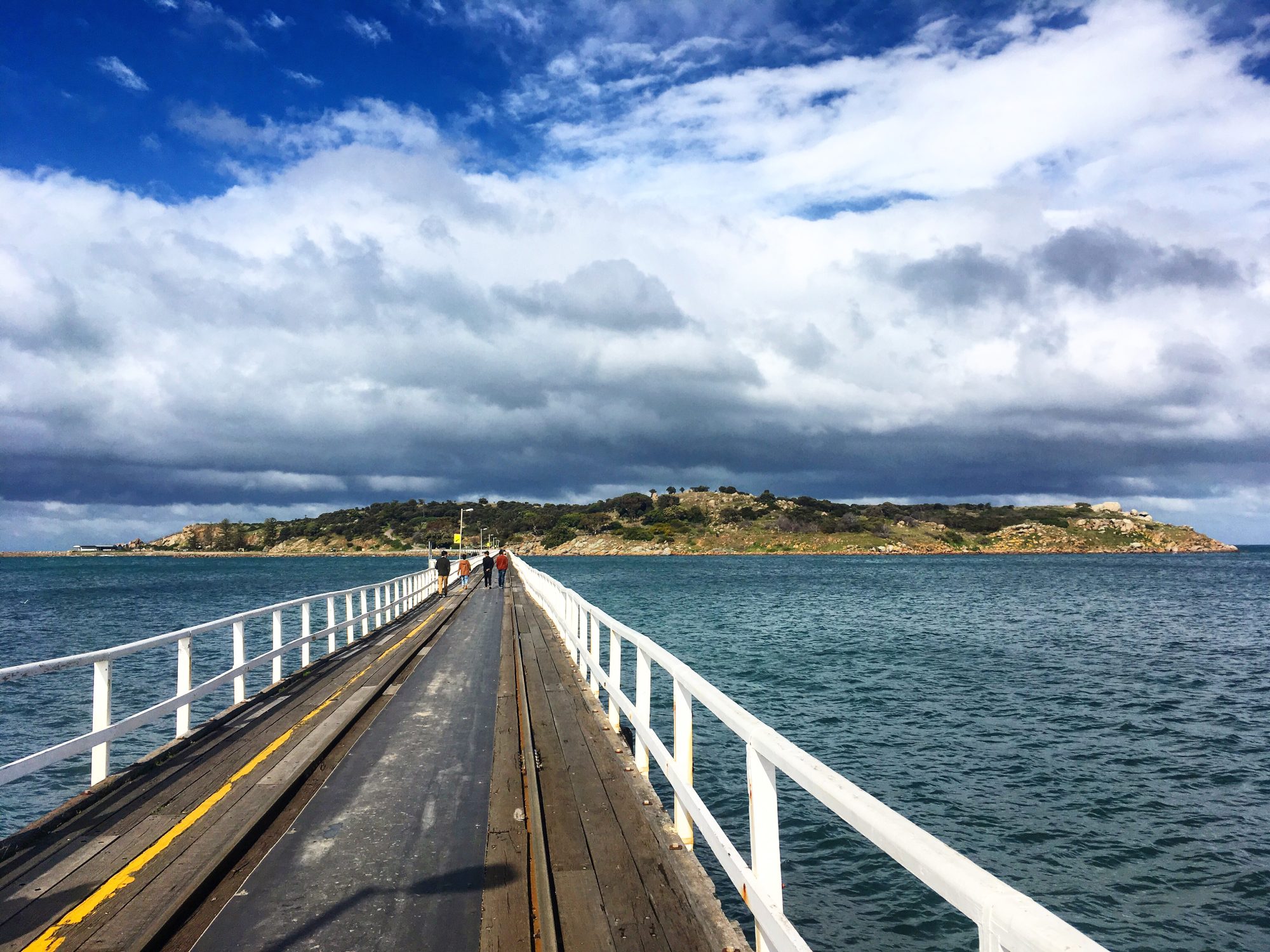
granite-island - walk the causeway across from the Victor Harbor foreshore, then the clifftop path around the island. The seaward side of the island is the best watching point, especially from the small lookout on the southern tip. The walk is about 45 minutes at a slow pace.
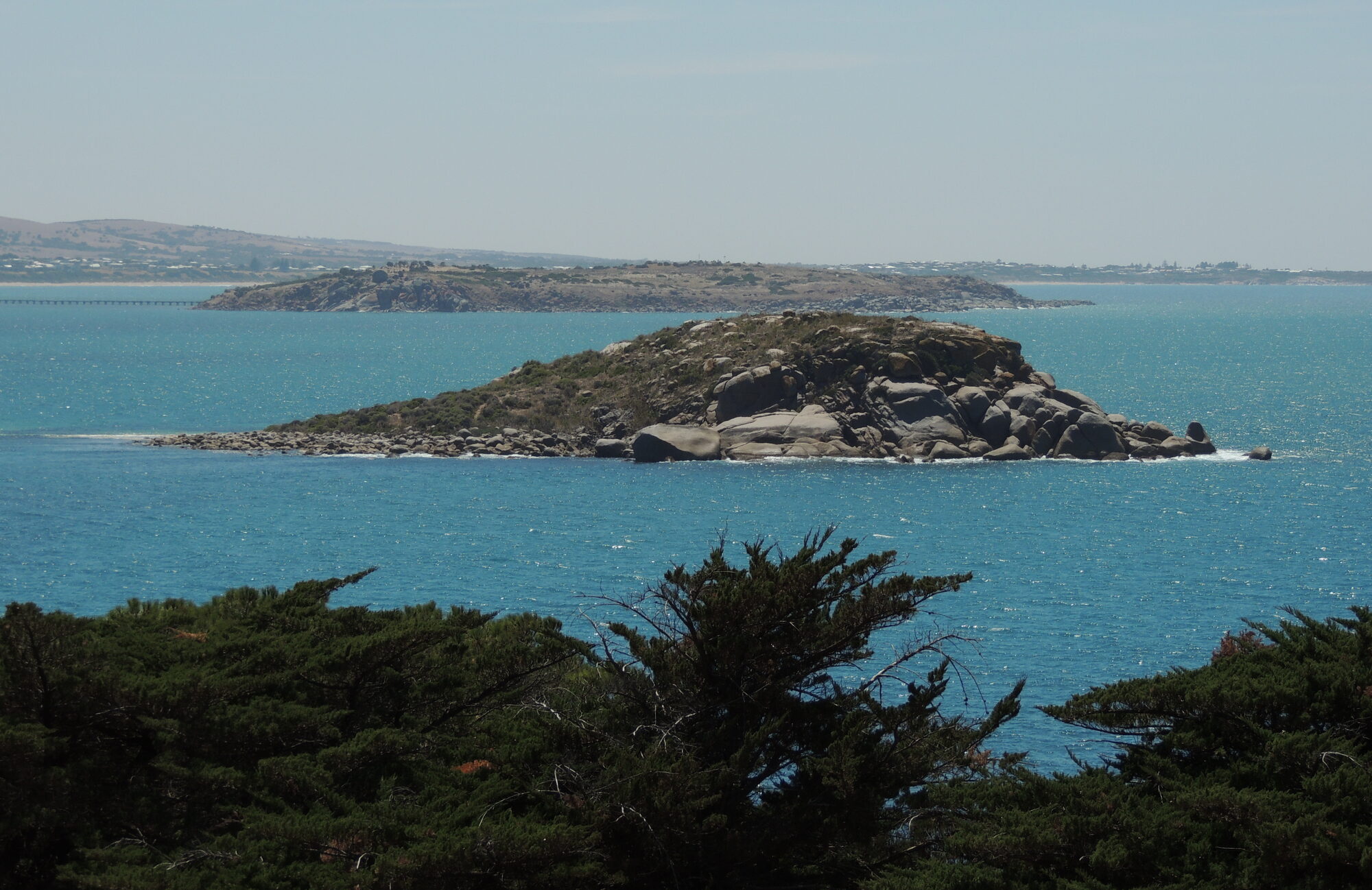
wright-island-encounter-bay and west-island-encounter-bay - two small rocky islands in the main part of the bay, both visible from the Encounter Bay foreshore and both near the deeper water that the cow-calf pairs prefer. On a good day you can sit on the beach at encounter-bay with binoculars and watch the animals moving between the islands.
kings-beach and petrel-cove on the eastern side of the Bluff - lower vantage points but more intimate. The cows sometimes come in very close to the cliffs here.
waitpinga-beach - further west and more exposed. You are as likely to see travelling whales as you are calving pairs. Pack proper cold-weather gear.
newland-head-conservation-park, the headland west of Waitpinga, has a clifftop walking track that runs for several kilometres along the whale coast. It is the walk for people who want a proper bushwalk with whales as the backdrop rather than the main event.
The interpretive anchor
The sa-whale-centre on Railway Terrace in Victor Harbor, inside the old 1860s railway building, is the essential first stop of any whale trip. The centre has a current sightings whiteboard updated daily, a full-size southern right whale skeleton hanging from the ceiling, a small but serious museum about the whaling station years, and volunteer staff who will tell you where the whales were yesterday and where they are likely to be today. It is also on a heated public-building budget, which matters in June.
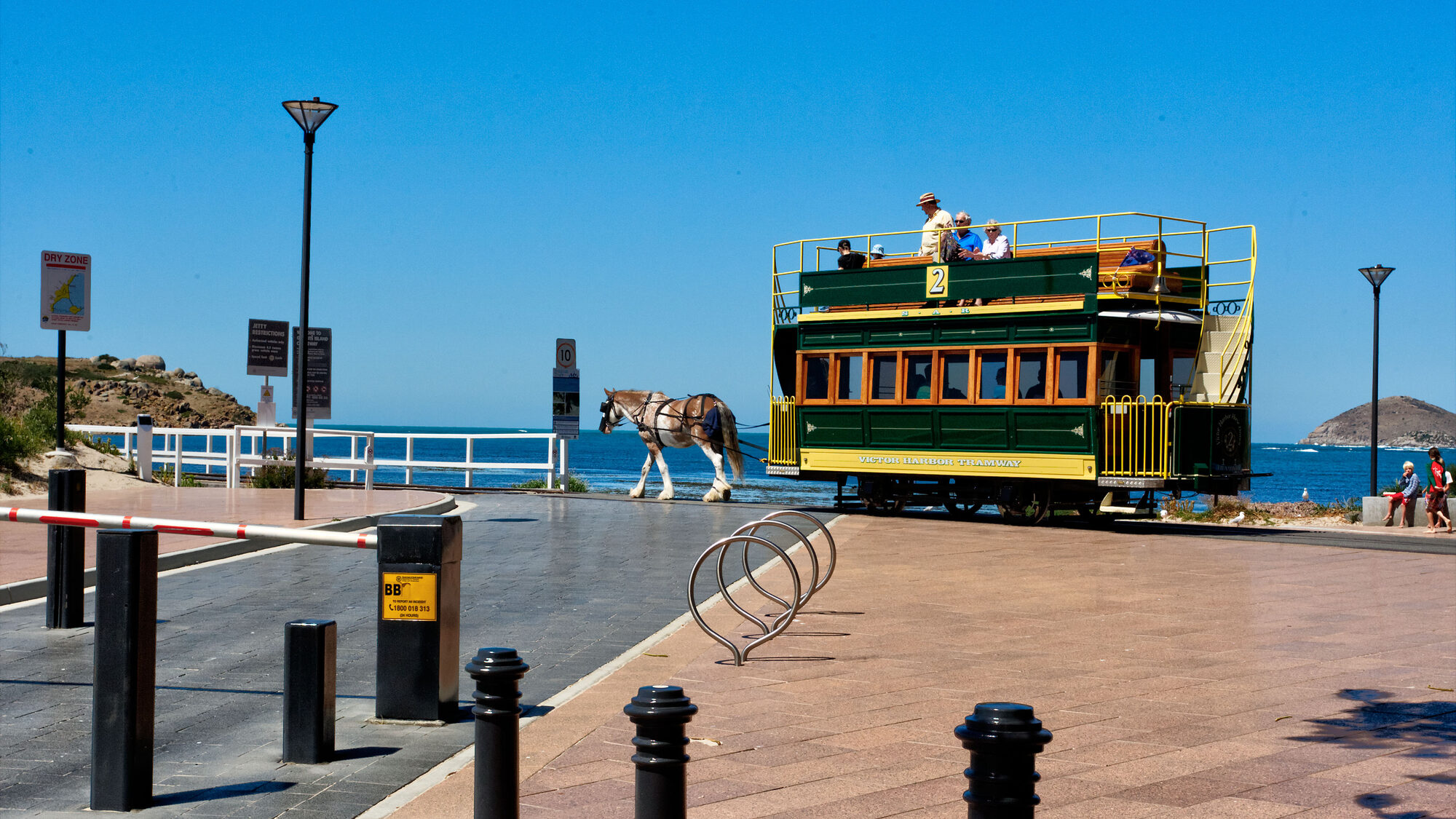
A proper winter whale day in Victor Harbor looks something like this: arrive mid-morning, check the board at the Whale Centre, walk out onto the causeway to granite-island, take the clifftop path around to the seaward lookout, watch for an hour, return via the victor-harbor-horse-drawn-tram to the foreshore, lunch at whalers-inn-victor-harbor overlooking the bay, spend the afternoon on the Bluff.
The whale you see on your first winter visit may be the descendant of one of the 300 that survived 1930. That is what makes the early-season arrival worth making a proper trip to see.