· 8 min read
Mid-winter is the Fleurieu Peninsula's quietest month and also, quietly, its best. Almond blossom at Willunga, southern right whales in Encounter Bay, cellar-door fires lit from lunchtime, waterfalls at full flow and almost nobody on the roads. Here is the July case.
The case for July
Most Fleurieu visitors come in summer, when the beaches are warm and the cellar doors are busy and the roads south of Adelaide are as full as they ever get. A smaller group comes in spring, for the vineyards and the wildflowers. Autumn is the wine-industry insider season, for vintage and the long lunches that follow it. Winter is the month everyone forgets about - and it is, if you know what to look for, the best month of the year on the peninsula.
Four things happen in July that do not happen in any other month, and together they make the case. First, the almond trees at Willunga blossom. Second, the southern right whales return to Encounter Bay and are present in numbers for the first time since the previous year. Third, the cellar-door fires are lit. Fourth, the waterfalls in the southern hills run at their full annual flow. And on top of all four, the Fleurieu in July is almost empty.
The almond blossom
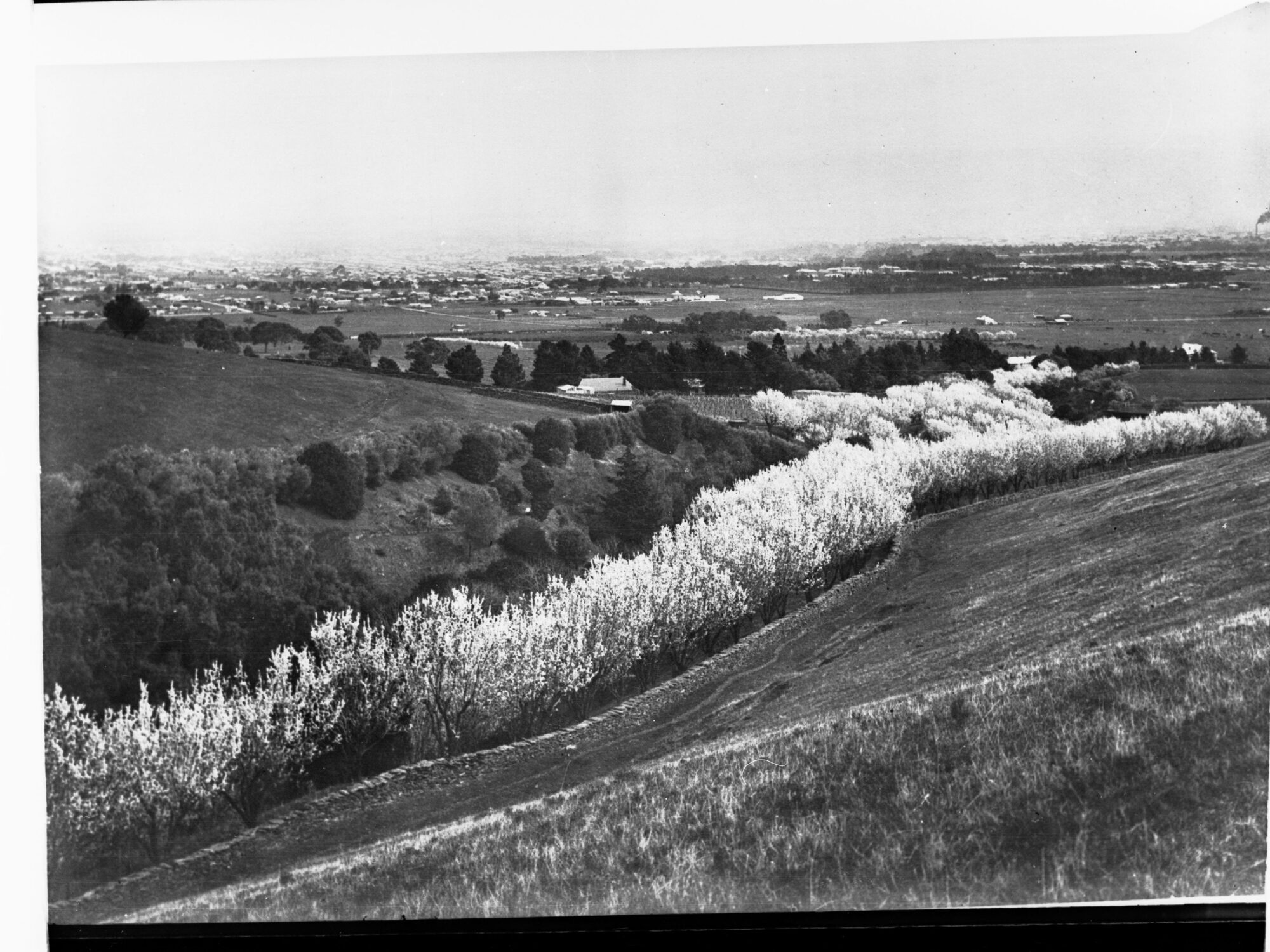
Willunga was the almond capital of Australia before it was a wine and food town, and the old commercial almond orchards south of the village are still there. They do not produce the volume they did fifty years ago but they still flower every July, in a window that typically falls between the second and third weekends of the month.
The blossom is not, strictly, spectacular. Almond trees are small and the flowers are pale, white tinged with pink, set against bare winter branches. What makes them worth a trip is the density and the timing. When hundreds of trees in a row blossom at once, in the middle of a cold grey month when nothing else in the landscape is flowering, the effect is startling. The orchards feel like they are emitting their own light.
The easiest almond stop is the road south from willunga past the-almond-train - a 1920s railway carriage converted into a specialty food shop that has been on the McLaren Vale side of Willunga for decades and sells almond products from the local orchards. The carriage is open most days. The blossom fields are on both sides of the main road south for about a kilometre. The willunga-farmers-market on Saturday mornings runs year-round and during blossom season has honey from beekeepers working the orchard flowers.
The whales
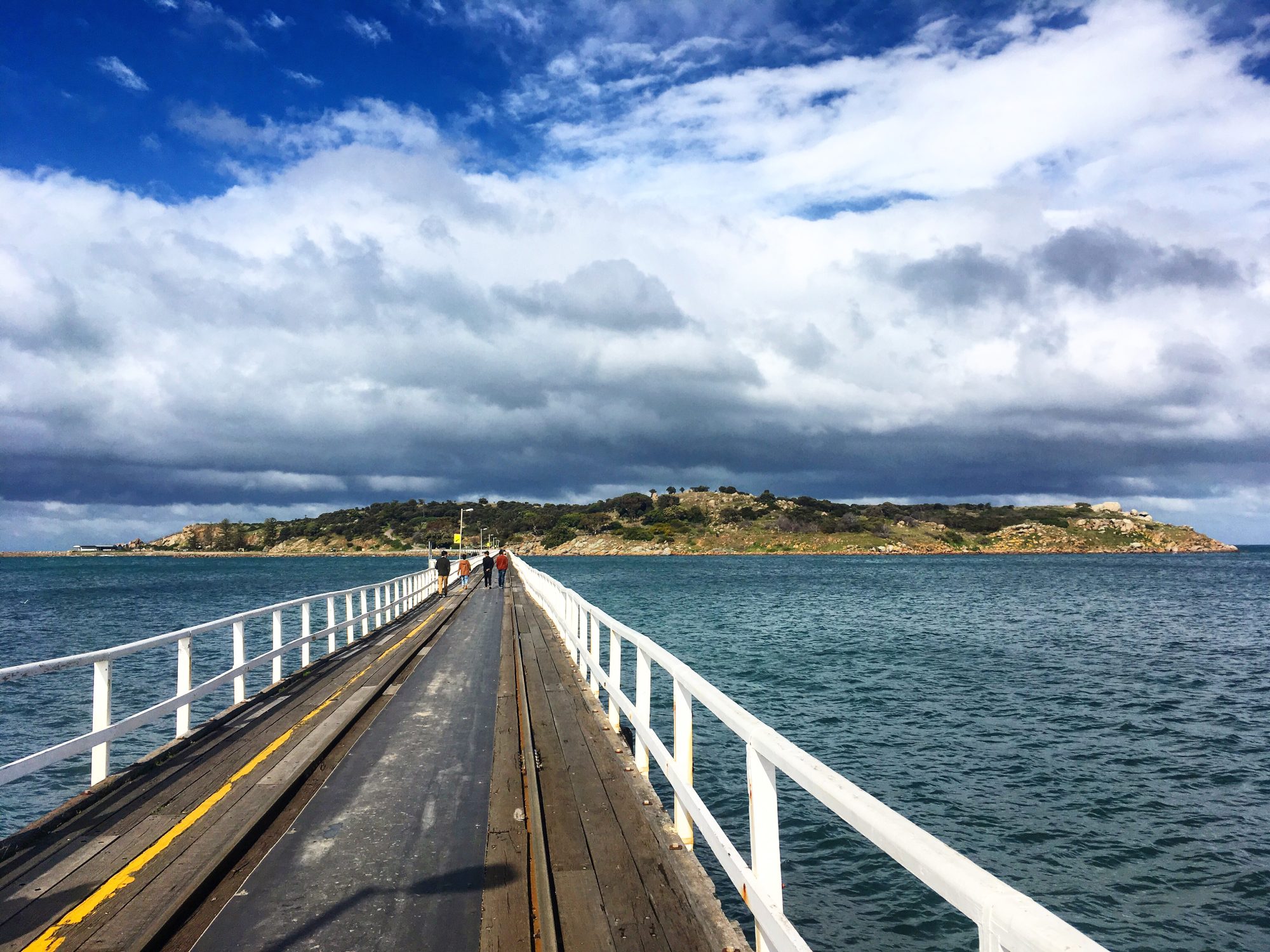
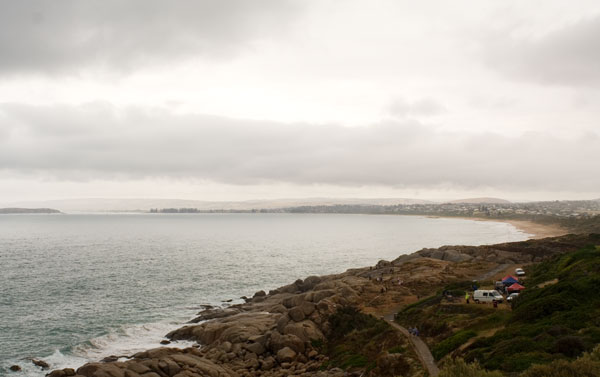
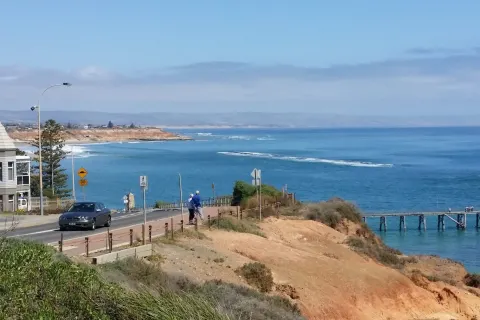
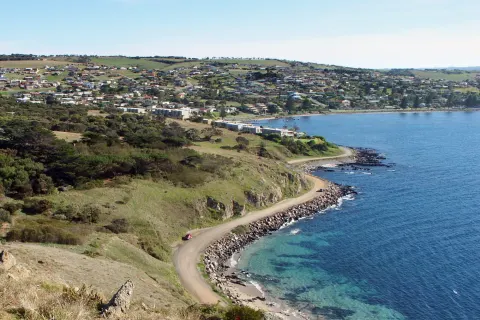
The southern right whales return to Encounter Bay in late May and early June. By July they are there in proper numbers - mothers and calves in the sheltered water between the-bluff-rosetta-head and granite-island, with cow-calf pairs typically spending several weeks in the same part of the bay. You can watch them from the cliffs above without binoculars. A single sustained session of watching in July will typically give you multiple sightings of blow, body roll, tail slap and occasionally breach.
The best vantage points for July whale watching are the the-bluff-rosetta-head (park at the base, walk the short steep path to the summit, look west into the bay), the cliffs above petrel-cove, and the kings-beach lookouts on the eastern side of the Bluff. The sa-whale-centre in the old Victor Harbor railway station on Railway Terrace is the interpretive anchor - it has current sighting information on a daily whiteboard, a full-size right whale skeleton, and volunteers who will tell you where to go that day.
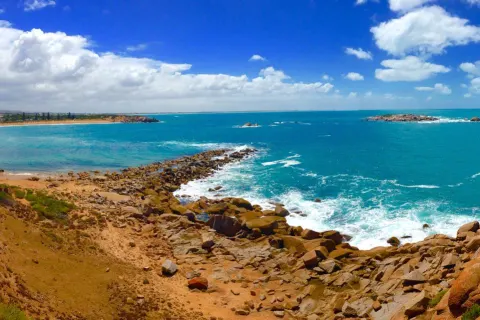
The second-best vantage point is further west at waitpinga-beach. The open coast at Waitpinga is rougher and the whales further offshore, but you sometimes see whales here that never come into Encounter Bay proper - travelling whales working their way east along the coast who never settle. Pack a jacket; the wind at Waitpinga in July is serious.
The waterfalls
The southern Fleurieu has two proper waterfalls and a handful of smaller cascades, and they only run at full flow in winter. By October most of them are a trickle. By January they are usually dry. July is when they run the way they were designed to run.
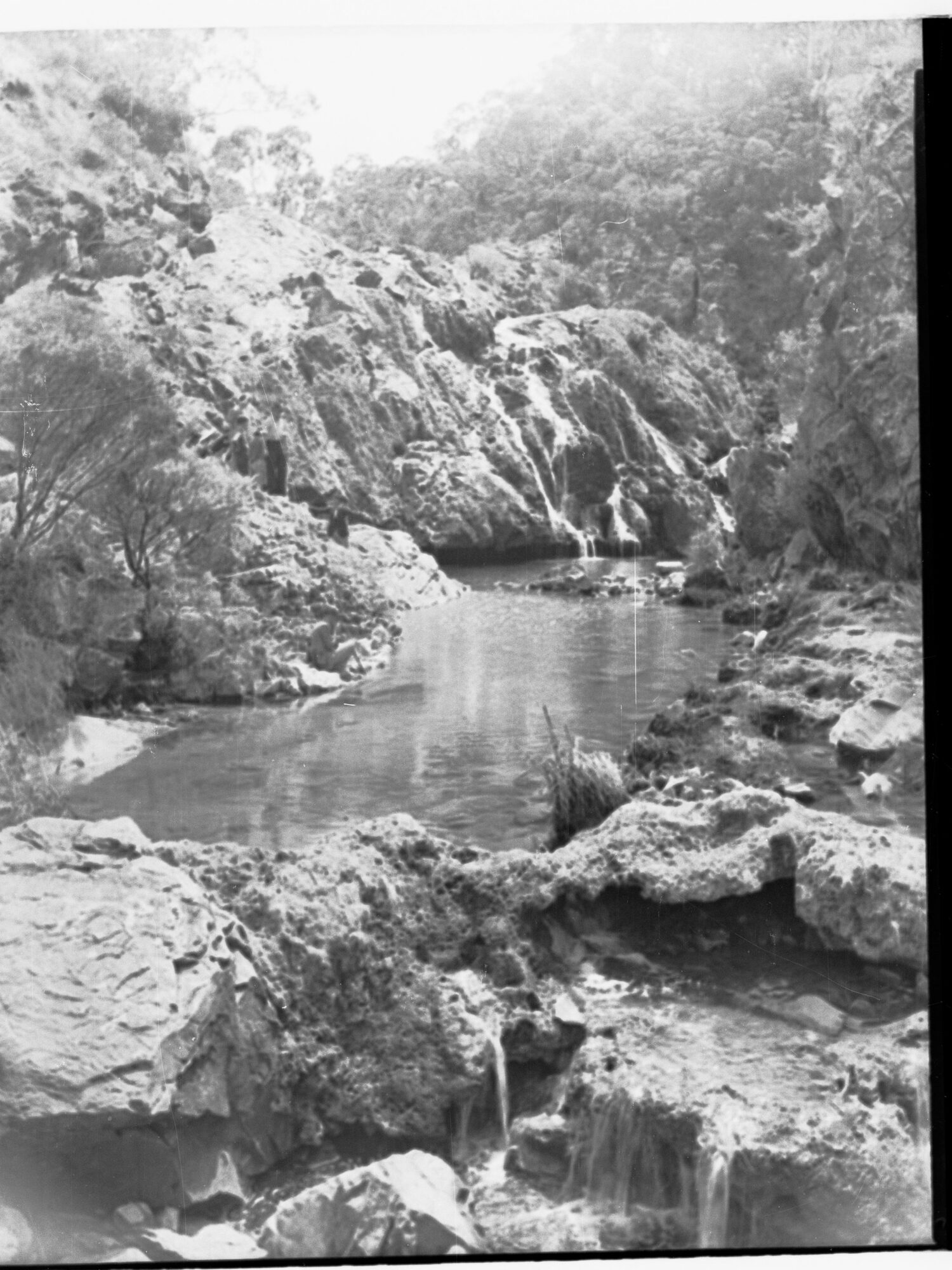
Hindmarsh Falls sits in a small gully off the Inman Valley Road about 15 kilometres west of Victor Harbor. The walk from the carpark to the viewing platform is about 200 metres on a formed path, almost entirely level, and suitable for almost any fitness level. In July, after the winter rain has been building for six weeks, the falls run in a clean 20-metre drop into the pool below. The pool and the fall itself are framed by stringybark eucalypts and native ferns that only come into proper form in winter. It is the easiest serious waterfall walk on the peninsula.
Ingalalla Falls, up the Normanville Creek about 20 kilometres from Yankalilla, is the bigger version of the same experience. A rougher carpark, a longer walk of about a kilometre each way, and a taller more dramatic waterfall at the end. The walk passes through thick winter-wet understory. Take proper shoes.
Both waterfalls are less than an hour's drive from each other and from Victor Harbor, and the two of them together make a good half-day loop from any Encounter Coast base.
The fires
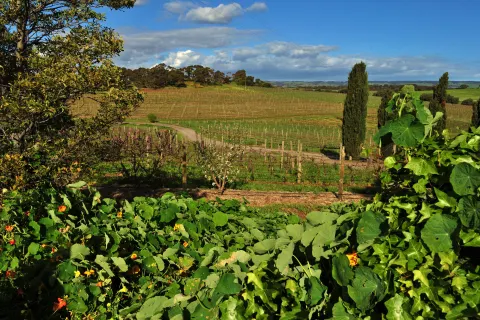
The McLaren Vale long-lunch tradition exists all year round but in July it becomes something different. Cellar-door restaurants that have massive open fireplaces - which most of them do - light them in the morning and keep them going through the afternoon. The the-salopian-inn, the the-victory-hotel on the Sellicks Hill Road, the whalers-inn-victor-harbor above the bay, the cellar-door kitchens at darenberg, hardys-tintara and dozens of smaller operators - all of these are at their most atmospheric in mid-winter when the fires are on and the lunch runs long.
The food changes to match the season. Braises, slow-roasted lamb, game dishes, root vegetables, winter-cellar wines at room temperature. The menu at the Salopian Inn in July is a different menu from the one in January and the January one is almost embarrassing in comparison. The Victory Hotel's winter lamb - from lambs raised on the pasture visible out the dining room window - is as good as any winter dish in Adelaide.
Nobody is there
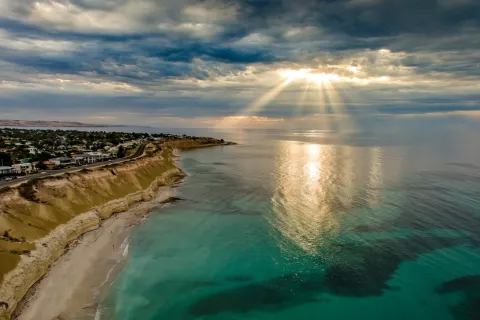
The unspoken virtue of July on the Fleurieu is that the region is essentially empty. The cellar doors that would be booked weeks ahead in November have walk-in tables on a Tuesday. The waterfall carparks that overflow in September have two cars in them. The kuitpo-forest on the inland side of the ranges is yours to walk in. The coast between waitpinga-beach and parsons-beach is so empty that on most days you will not see another person on any of it. The drive from Adelaide takes less time because nobody else is doing it.
The one trade-off is weather. July is cold (daytime maximum 12-15 degrees), often windy, and rains on average one day in three. You need a proper jacket and a willingness to drive in occasional heavy rain. In exchange you get a quieter, clearer, more atmospheric version of the peninsula than you can find at any other point in the year.
A July weekend
A workable July weekend out of Adelaide looks like this: drive down Friday afternoon, check into an accommodation between willunga and Victor Harbor (the cottages at Port Willunga or above Encounter Bay are ideal), long lunch and fire at the Salopian Inn on Saturday, whale watching at the Bluff on Saturday afternoon, dinner at Whalers Seaside Dining overlooking the bay, the Willunga Farmers Market Saturday morning before the lunch, Sunday at the waterfalls and then home via Kuitpo. Allow for weather. Take a hot flask. It is the quiet season on a coast that is worth seeing quiet.