· 8 min read
In the winter of 1852, gold was pulled out of a creek near Echunga in quantities that briefly looked like they might make the Mount Barker hills the richest diggings in Australia. Within a year Ballarat had stolen the attention. The Strathalbyn miners' cottages, puddling sites and the bank that held the dust are still there if you know where to look.
When Adelaide nearly went to Echunga
The winter of 1852 was a strange season in the South Australian colony. Across the border in the Port Phillip District (not yet a separate colony), the Ballarat and Bendigo gold rushes were draining every able-bodied man out of Adelaide. Ships were sailing east from Port Adelaide every week packed with labourers, tradesmen, shepherds and shopkeepers all bound for the Victorian diggings. Whole trades were emptied. The colonial government in Adelaide was seriously worried that South Australia would not survive the year as a functioning economy.
Against that background, in June 1852, two prospectors named Chapman and Hardiman pulled a coffee-tin's worth of alluvial gold out of a creek south-east of the small German farming settlement of Echunga, in the hills above the modern strathalbyn-historic-town. The find was authenticated by the colony's assayer within a week. By July the creek was crawling with several hundred diggers. By September the number was closer to two thousand. For a few extraordinary months it looked as if the South Australian hinterland might have the answer to the Victorian problem - a local goldfield that would keep the labour force in the colony instead of shipping it east.
The Echunga field did not last. By the end of 1853 most of the diggers had given up and gone to Victoria after all. But in the eighteen months that it ran hot, the Echunga rush did something subtler and more lasting: it built Strathalbyn into a proper town.
Why Strathalbyn
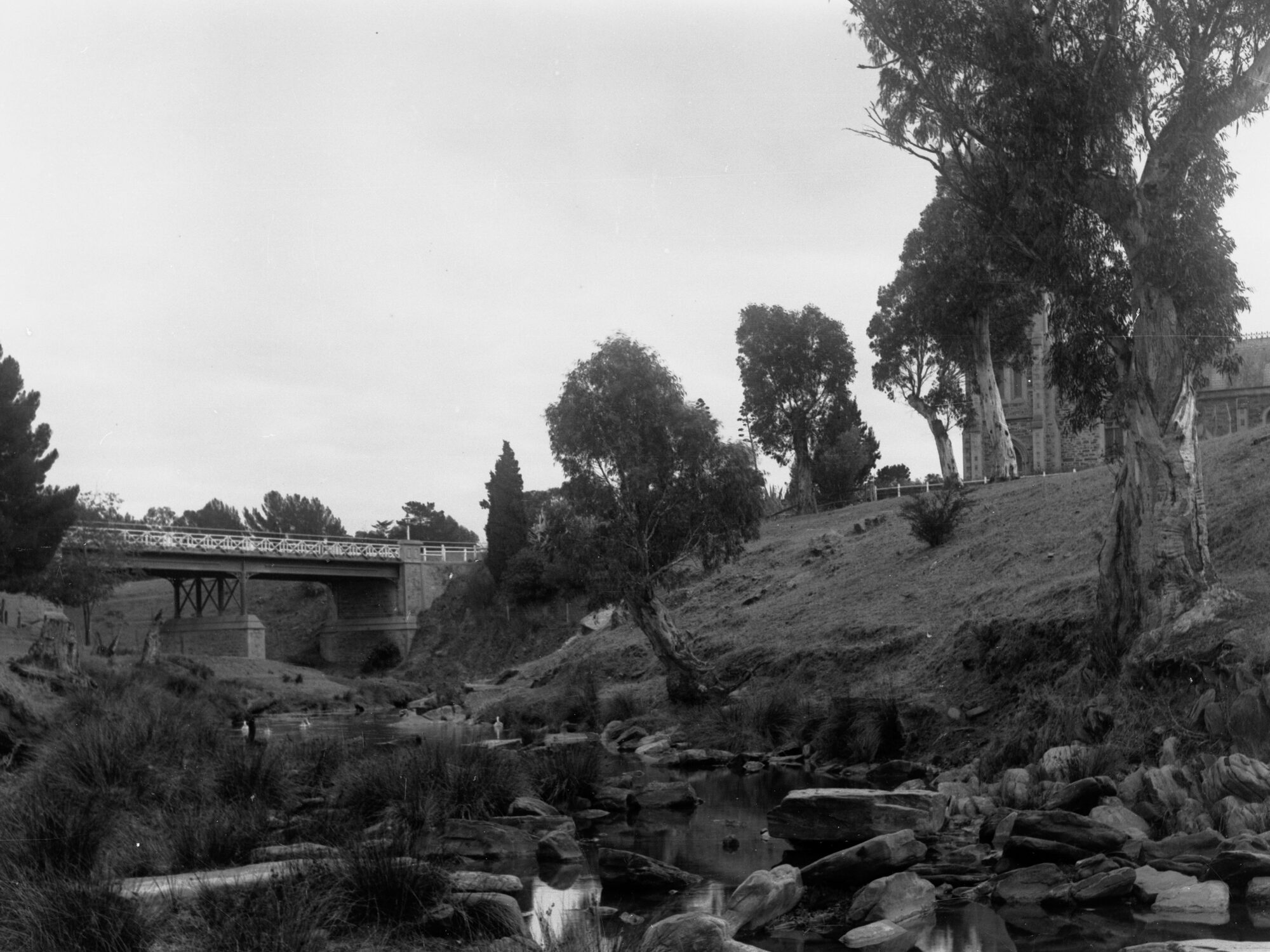
Strathalbyn had been settled in 1839 by Scottish Presbyterians along the banks of the Angas River, 57 kilometres south-east of Adelaide. By 1852 it was a small farming service town - a church, a flour mill, a couple of hotels, a general store, perhaps 200 residents. It was also the nearest real town to the Echunga diggings.
What that meant in the winter of 1852 was that every digger heading to Echunga from Adelaide passed through Strathalbyn, and every ounce of alluvial gold coming out of the Echunga creeks had to be weighed, banked, exchanged for cash, and spent on supplies somewhere before the diggers went back for another week. Strathalbyn became the banking and supply town of the rush almost by default. The Bank of South Australia opened a Strathalbyn branch specifically to handle the gold dust in late 1852. General stores multiplied. The existing hotels - the coaching inns that had served the Adelaide-to-Wellington mail route - were suddenly full every night with diggers who wanted a bed, a meal and a drink on their way in and their way out of the hills.
The miners' cottages
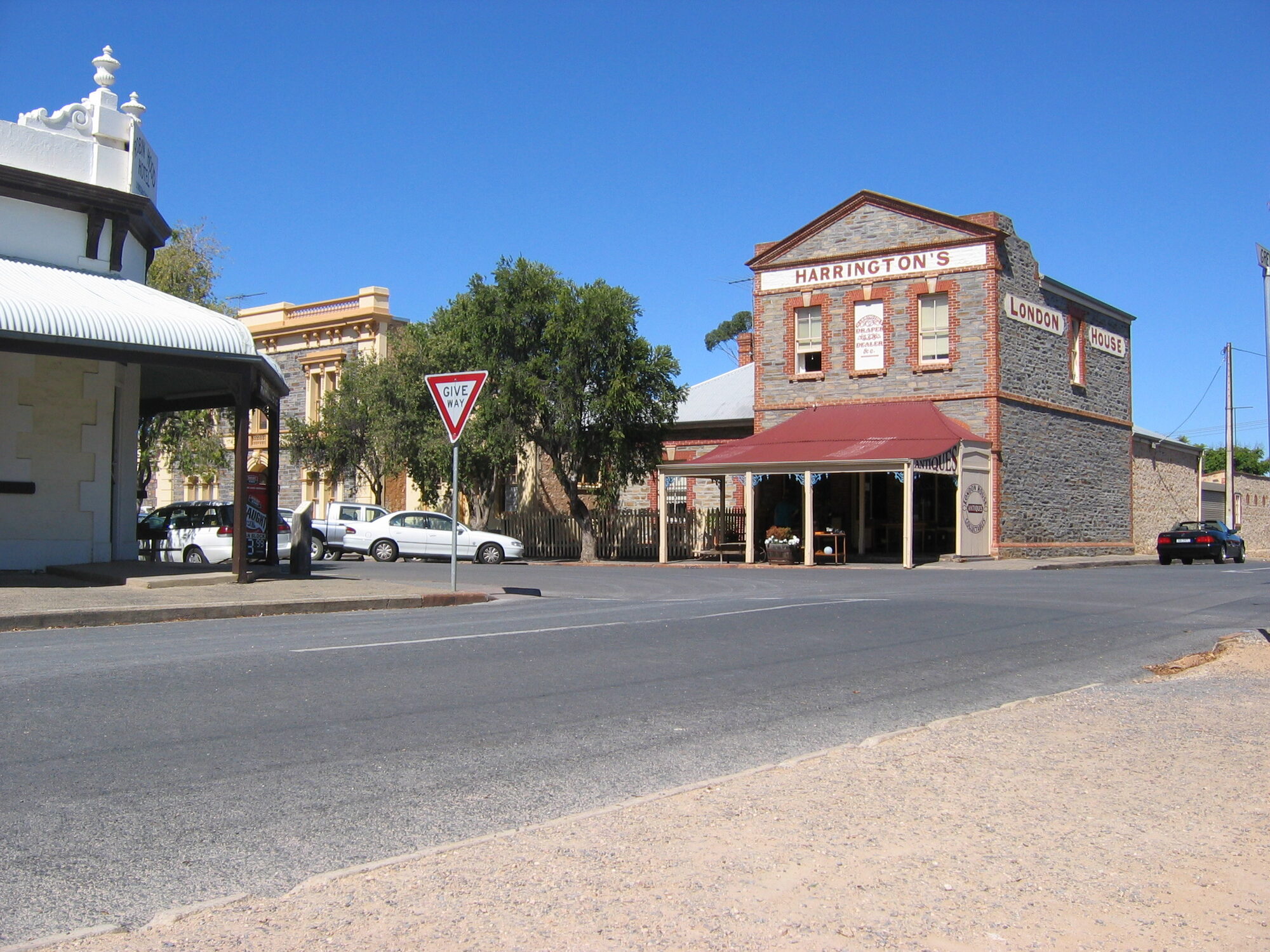
The visual evidence of the rush is still in the Strathalbyn streetscape. The small stone cottages on the side streets around the strathalbyn-antique-precinct - two rooms, a steep-pitched roof, a single chimney, set directly on the property line with no front garden - are mostly from the 1852-1854 period. These are miners' cottages in the strict sense: built quickly and cheaply during the rush for the sudden influx of men who needed somewhere to sleep between trips to the diggings. Several dozen of them survive, now whitewashed and restored and worth many hundreds of thousands of dollars each, which would have astonished the original 1850s diggers who paid a few pounds a year in rent.
The larger, more substantial buildings on the main streets - the 1853 two-storey stone buildings around the square, the original 1850s post office, the surviving coaching-inn frontages of the terminus-hotel-strathalbyn and victoria-hotel-strathalbyn on Commercial Road - are the other half of the same story. They were built with the money the rush brought into the town. So was the first stone bank building (later rebuilt, but on the same site) on High Street.
The puddling sites
The actual diggings were at Echunga, on a creek about 15 kilometres north-west of Strathalbyn. The standard technique for alluvial gold on the Echunga field was puddling - breaking up the creek-bed clay in a large circular tub with water and a rotating wooden paddle so the gold particles sank to the bottom while the clay washed away. A typical puddling setup required a circular pit about three metres across and half a metre deep, with a central post and a long wooden arm worked by a horse walking in a circle.
Those puddling pits are still in the ground. If you walk the upper Onkaparinga River tributaries around Echunga today, you will find shallow circular depressions in the forest floor, filled now with bracken and fallen bark, exactly the right size and shape for a 1850s puddling rig. The gilberts-motor-museum in Strathalbyn has a full-size reconstructed puddling arm in its yard, built by a local historian in the 1980s, and it is the easiest way to understand what the technology actually looked like.
The strathalbyn-national-trust-museum on the corner of Rankine Street has the gold rush story in much more detail - original gold scales, an 1852 digger's licence, the ledger from the first Strathalbyn bank, and a small collection of gold specimens from the Echunga field.
The church, the gardens and the railway
The rush also funded most of the Strathalbyn landmarks that visitors come to see today. The beautiful bluestone st-andrews-church-strathalbyn on Rankine Street was begun in 1869 - after the rush had ended but with money that had been accumulating in the town for a decade and a half. The soldiers-memorial-gardens-strathalbyn on the Angas River frontage were laid out in the 1880s on land that had been a grazing paddock owned by one of the families who had profited from the rush. The Strathalbyn railway - the branch line that became the strathalbyn-railway-station and visitor centre - was funded in part by the same 1850s capital pooling that came out of the gold years.
A few kilometres south of town, the ruins of the sandergrove-methodist-chapel-ruins sit on a hillside that was briefly prospected in 1852 on the (incorrect) belief that the Echunga field extended that far. The prospectors found nothing; the chapel was built a few decades later on the same paddock; and the paddock itself has now returned to the quiet pastoral landscape it was before 1852.
Where it ended
By the end of 1853, most of the Echunga diggers had gone to Victoria. The Echunga field was not rich enough to compete with Ballarat. The easily-worked alluvial gold ran out within a couple of years and the subsequent reef mining never became commercially viable. The rush was over almost as quickly as it had started. A small hard core of miners kept working the Echunga creeks on and off for another 50 years - there were brief small revivals in the 1880s and 1900s - but the numbers never approached 1852 again.
Strathalbyn kept the buildings and the institutions the rush had built. The bank stayed. The coaching inns stayed. The miners' cottages stayed. The town that had been a 200-person farm service settlement in June 1852 was, by the end of the decade, a proper regional centre of a thousand people with stone public buildings, a bank, several hotels and a road out to the Adelaide Hills that had been widened and graded to handle the gold traffic.
A walking tour
The easiest way to see the rush in the Strathalbyn streetscape is to start at the strathalbyn-national-trust-museum, walk north along Rankine Street to st-andrews-church-strathalbyn, then east along Dawson Street into the antique precinct, then down through the strathalbyn-antique-precinct to the soldiers-memorial-gardens-strathalbyn. The walk takes about an hour at a slow pace. The robin-hood-hotel-strathalbyn on Dawson Street or the terminus-hotel-strathalbyn on Rankine Street are the natural lunch stops - both still in their original 1850s buildings, both still pouring beer to travellers.
The gold is long gone. The town it built is still here.