
· 6 min read
Between the 1850s and the 1890s, Goolwa was one of the busiest ports in colonial South Australia. Paddle steamers brought wool, wheat, copper and timber down the Murray, and a horse-drawn tramway carried it the last few kilometres to the open sea.
The 1853 race
In the winter of 1853 the South Australian government offered a £4,000 prize to the first commercial steamer to navigate the Murray River from its mouth to the junction with the Darling. Two boats raced for it. The first was the Lady Augusta, a steel-hulled paddle wheeler captained by Francis Cadell, a Scottish-born mariner who had been making the case for Murray River trade for years. The second was the Mary Ann, a wood-and-iron paddle steamer built in Mannum by a young miller named William Randell who had simply taught himself how to do it.
Cadell got the credit. Randell got there first. Both made it to Swan Hill, both came back, and the two of them collectively unlocked one of the most extraordinary inland trade booms in 19th-century Australia.
A river full of steamers
For the next forty years, paddle steamers worked their way up and down the Murray, the Darling and the Murrumbidgee. The trade ran on wool. Squatters from the inland sheep stations of New South Wales, Victoria and South Australia would bale up their season's clip and float it downstream to Goolwa, where it could be sold or transhipped overseas. On the return trip the steamers carried general stores, mail, settlers, machinery, and the building materials that opened up half a continent. By the 1870s there were dozens of working steamers on the river system at any one time, and the wharves at Echuca, Mannum, Renmark and Goolwa were busy almost year-round.
Goolwa was the western terminus. Sitting just inside the Murray Mouth, on the freshwater side of where the river meets the sea, it was the natural transhipment point - the place where river cargo had to be moved off the steamers and onto something else for the journey to the open ocean.
The Murray Mouth problem
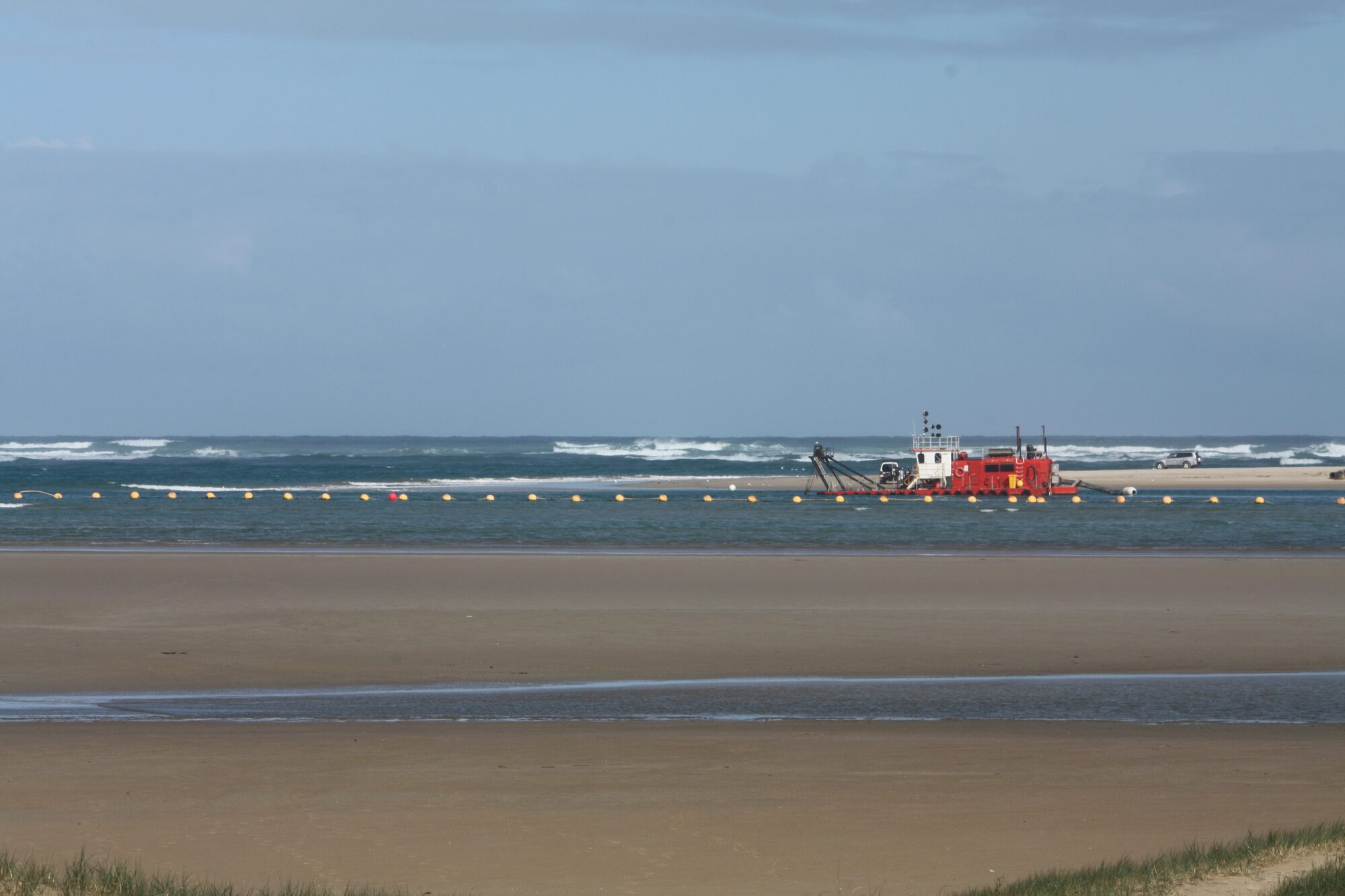
That 'something else' was the catch. The Murray Mouth at Goolwa is a wild, shifting, dangerously shallow stretch of water where the river spills out across a sandbar into the Southern Ocean. It was - and is - effectively impassable to ocean-going ships. The mouth's reputation was so bad that the colonial government decided the best way to bypass it was simply to build a railway across the narrow strip of land between Goolwa and the deep-water harbour at Port Elliot, seven miles to the south.
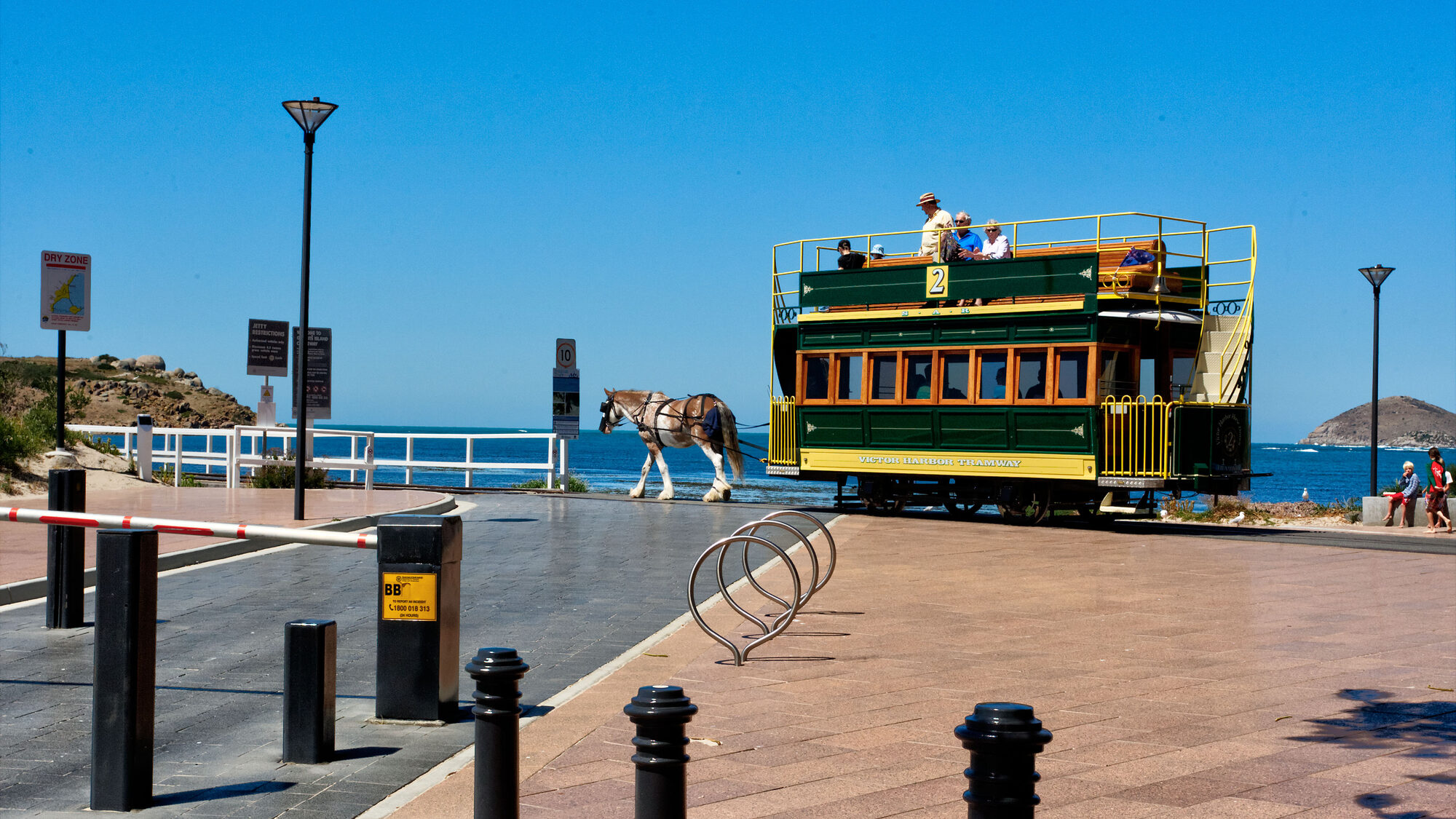
The Goolwa to Port Elliot Tramway opened in 1854 - mainland Australia's first public railway. It was horse-drawn, then converted to steam in the 1880s. River cargo arriving at Goolwa was loaded into wagons, hauled across the land bridge to Port Elliot (and later Victor Harbor, after Port Elliot's exposed harbour kept wrecking ships), and loaded onto sailing ships for the journey to Adelaide and beyond. For four decades it was a working international supply chain run on horses and steam.
The decline
What killed the river trade was iron. From the 1880s onwards, government railways began punching out from the colonial capitals into the wheat country - the Adelaide-Morgan line opened in 1878, and from that moment on it was usually faster and cheaper to send cargo overland by rail than to wait for a paddle steamer to fight its way down a sometimes-low river. By the 1890s the steamers were mostly carrying tourists and timber. By the 1920s most had been sold for scrap or beached on river banks to rot.
What survives
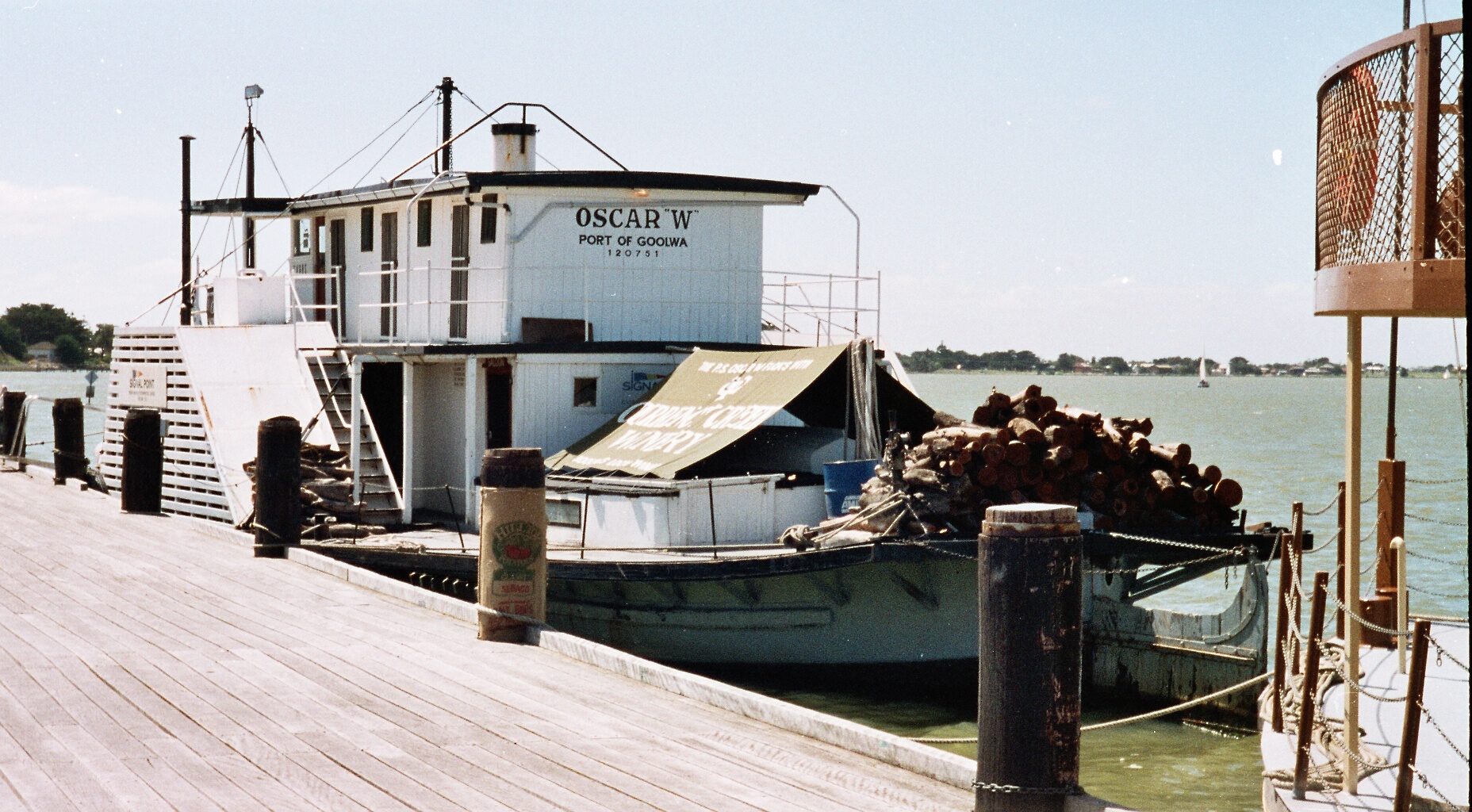
The Goolwa Wharf precinct is largely intact. The wharf itself, the railway shed, the old company offices and warehouses - all of them still stand, restored over the last few decades by the Alexandrina Council and a small army of volunteers. The PS Oscar W, built in Echuca in 1908 and one of only a handful of original Murray paddle steamers still operational, is moored at the wharf and runs cruises on weekends. Up the river there are more survivors - the PS Marion at Mannum (1897) and the PS Industry at Renmark (1911) - all kept alive by volunteer crews.
Walk the wharf precinct on a quiet weekday and the bones of the old port are still all there. The slate buildings, the iron rails, the wide wooden decks, the smell of woodsmoke from the Oscar W's boiler - the era is closer than it looks.