
· 5 min read
The eastern Fleurieu was settled early and well - Strathalbyn was laid out in 1839 by Scottish free settlers, Willunga grew up around slate quarries in the 1840s, and Old Noarlunga is older still. A day's drive connects the three.
If you like your travel with a side of history, the eastern Fleurieu is where you want to be. This is the quieter corner of the peninsula - inland of the wine region, away from the Encounter Coast - and it is where the colonial-era architecture is most intact.
Three towns anchor this trail: Strathalbyn, Old Noarlunga and Willunga. Between them they cover slate quarries, Scottish free settlers, colonial river ports and a 19th-century police station still standing on the original site. Allow a full day.
Strathalbyn
Start at Strathalbyn, an hour south-east of Adelaide. The town was founded in 1839 by Scottish free settlers and has more than 30 state heritage-listed buildings - probably the best-preserved colonial main street on the Fleurieu. The Angas River runs through a tree-shaded park in the centre of town, crossed by stone bridges.
Strathalbyn is also known, unofficially, as the antiques capital of South Australia. More than a dozen antique dealers line the main street, and a monthly collectors' fair pulls buyers from across the state. You can wander the heritage buildings for an hour and easily disappear into the shops for another.
Across the peninsula
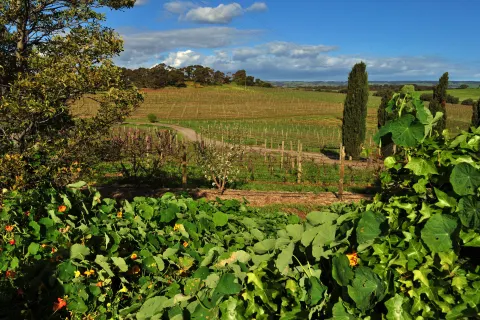
Leave Strathalbyn heading west via the Strathalbyn - Willunga Road. This is a quiet country drive through dry-stone walls and eucalypt-dotted farmland. You'll cross Finniss, pass through Mount Compass dairy country, and emerge on the east side of the McLaren Vale wine region in about 45 minutes.
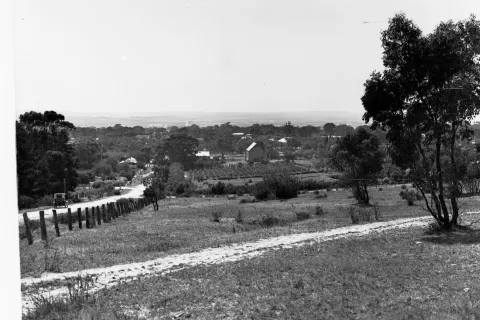
Before you reach Willunga, detour north to Old Noarlunga. The village is tucked inside a dramatic horseshoe bend of the Onkaparinga River and has remained remarkably intact despite the rapid urbanisation of nearby Noarlunga Centre. Walk around the historic core: the 19th-century stone church, the old cemetery, the heritage Horseshoe Inn, and the original rows of colonial cottages. It is listed on the South Australian Heritage Register as a whole precinct.
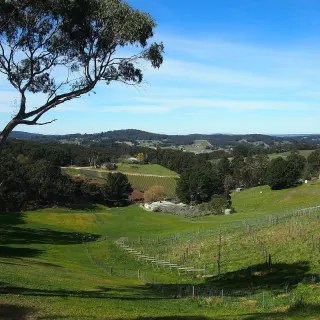
If you have time, the short walk down to the river and onto the Chapel Hill Lookout track gives you a view back over the village with its dramatic horseshoe bend.
Willunga
Finish the day at Willunga. Aim to arrive for lunch.
Willunga grew up in the 1840s around the slate quarries that once supplied roofs for much of colonial Adelaide. The town's original 1855 police station and court house are still standing on 61 High Street, along with the 1857 Old Post and Telegraph Station. Walk the heritage main street with a coffee in hand and notice the slate buildings - the same soft dark stone is still quarried nearby today.
Lunch at one of two Willunga institutions: Russell's Pizza (Friday and Saturday nights only, booked out weeks ahead - plan for this) or the Hither & Yon cellar door on High Street, where a boutique winery runs tastings from a restored 1850s stone cottage two minutes from the courthouse.
If you are visiting on a Saturday morning, the Willunga Farmers Market in the grounds of Willunga High School is widely considered one of the best regional markets in the country. Plan to be there for opening at 8am and leave room in the boot of the car.
The slow way home
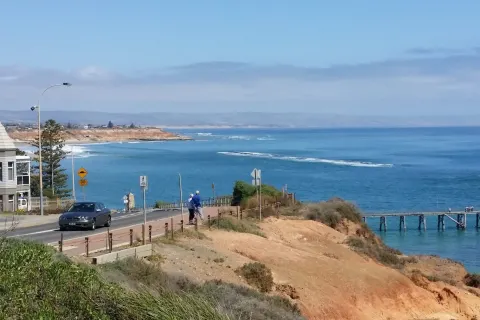
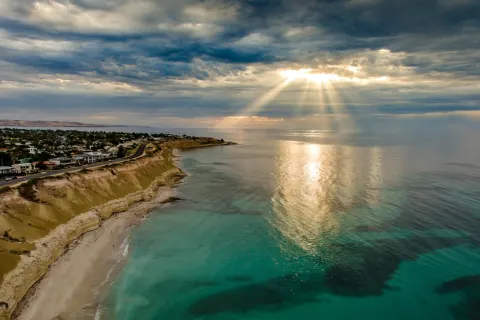
Drive home via the coast - Aldinga, Port Willunga, Maslin Beach, Sellicks Beach - for the scenic return to Adelaide. The whole day should take 8-9 hours with lunch.
Practical notes
- Strathalbyn's antique shops are mostly closed on Sundays and Mondays
- Russell's Pizza at Willunga only opens Friday and Saturday evenings - book weeks ahead
- Willunga Farmers Market is Saturday morning only, 8am to noon
- Old Noarlunga is best explored on foot - park at the heritage precinct and walk