





Wildlife & Nature
Whales, Penguins & More
The best wildlife & nature in Fleurieu Peninsula
From southern right whales calving in Encounter Bay to the waterbirds of the Coorong and the reef life of Aldinga, the Fleurieu packs a remarkable range of wildlife into one compact peninsula.
Read our guide to wildlife & nature ↓Browse wildlife & nature by area
Map shows the 2 places on this page.
Woodstock Wildlife Sanctuary
View →A 3-hectare wildlife sanctuary on the Woodstock Wine Estate at McLaren Flat, with rescued kangaroos, wallabies and an emu, and a daily 11:30am feeding session.
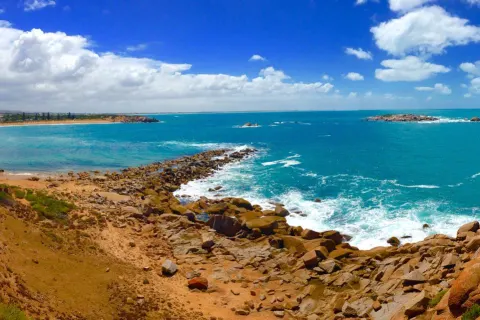
Wright Island
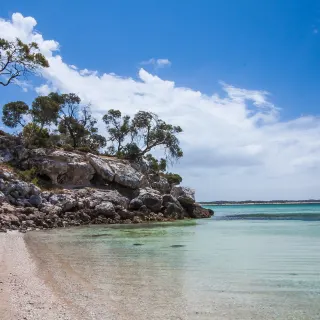
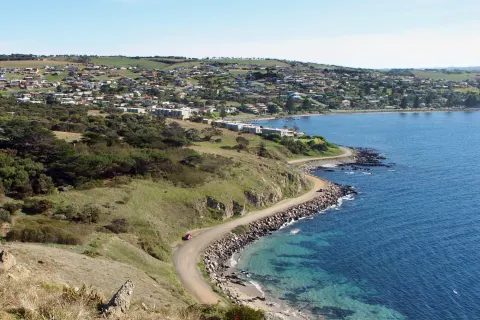
View →A small offshore granite island sitting in Encounter Bay west of Granite Island, with a rocky shoreline that forms part of the bay's signature view.
About wildlife & nature in Fleurieu Peninsula
The Fleurieu Peninsula is one of the best places in South Australia to get close to wildlife in the wild. Each year between roughly May and October, southern right whales travel to the sheltered waters of Encounter Bay off Victor Harbor to calve - you can often spot them from clifftop lookouts at the Bluff and Granite Island without ever leaving land.
Beyond the whales, the peninsula's natural diversity is remarkable for its size. The Coorong, at the southern edge near Goolwa, is an internationally significant wetland alive with pelicans, black swans and tens of thousands of migratory shorebirds. Deep Creek and the southern conservation parks shelter kangaroos, echidnas and a rich birdlife, while little penguins, New Zealand fur seals and bottlenose dolphins patrol the granite islands and reefs of the coast.
Spring carpets the bushland reserves in native wildflowers and orchids, and the rock pools of Aldinga Reef and the western beaches reveal their own miniature worlds at low tide. Whether you're whale watching, birdwatching or simply walking quietly through the bush, the Fleurieu rewards anyone who slows down and looks closely.
Wildlife & Nature in Fleurieu Peninsula - frequently asked questions
What wildlife is the Fleurieu Peninsula known for?
The Fleurieu is best known for the southern right whales that come into Encounter Bay off Victor Harbor each winter to calve. Inland, Deep Creek National Park is home to western grey kangaroos, short-beaked echidnas and around 100 bird species, while Seal Island in Encounter Bay supports long-nosed fur seals and Australian sea lions. The Coorong near Goolwa is an internationally significant wetland for waterbirds. Leafy sea dragons and Granite Island's little penguins are now much harder to see than they once were.
When is the best time to see whales on the Fleurieu Peninsula?
Southern right whales travel to the sheltered waters of Encounter Bay roughly between May and October, with the peak months usually July and August. You can often spot them for free from clifftop lookouts such as the Bluff and from Granite Island, and Big Duck Boat Tours runs boat trips out of the Granite Island Causeway during the season.
Can you still see penguins on Granite Island?
Granite Island once had a large little penguin colony, but numbers have fallen dramatically from well over a thousand birds in the early 2000s to only a few dozen in recent years. Sightings are no longer reliable, so the island is better visited for its walking trails, granite formations and whale watching, with the horse-drawn tram (running since 1894) and the causeway both connecting it to Victor Harbor.
Can you still see leafy sea dragons on the Fleurieu?
Rapid Bay and Second Valley were long famous for leafy sea dragons, but the 2025-26 harmful algal bloom killed many of them. Divers who once found dozens at Rapid Bay now report only one or two, and the old Rapid Bay jetty, where the T-section was the classic dive site, is closed behind an exclusion zone after storm damage. Seagrass, weedy sea dragons and blue devils have been reported in good health at both sites, so experienced divers can still enjoy them. Check current algal bloom and jetty updates before you go.
Where is the best place to snorkel and see marine life on the Fleurieu Peninsula?
Aldinga Reef Aquatic Reserve, declared in 1971, is one of South Australia's oldest and most accessible marine sanctuaries, where at low tide you can walk straight onto the intertidal reef to explore rockpools or snorkel the shallower sections in calm water. The reef supports wobbegongs, blue devil fish, leatherjackets and big schools of zebrafish and old wives, while more experienced divers head out by boat to the Aldinga Drop Off.